
The following article by Jenny Farrell was first published in Unity, the weekly paper of the Irish Communist Party.
THE dystopian fiction of imperialism, beginning with Jack London's Iron Heel, has returned in the 2020s. From Paul Lynch's Prophet Song to Ali Smith's Gliff, novelists imagine futures uncomfortably close to the present.
Smith builds resistance into the very structure of Gliff. Through a mother, two parables, and the horse Gliff, Smith presents fightback as improvised salving. The novel's central political category is the "unverifiable": those stripped of digital identity for speaking truth to power. The horse Gliff carries the memory of what is deeply humane in a world where the system, and its enforcers, have become inhuman.
The state in Gliff renders people "unverifiable", subjecting them to detention, torture, and "re-education": "One person here had been unverified for saying out loud that a war was a war … Another … for writing online that the killing of many people by another people was a genocide. Another … for defaming the oil conglomerates by saying they were directly responsible for climate catastrophe."
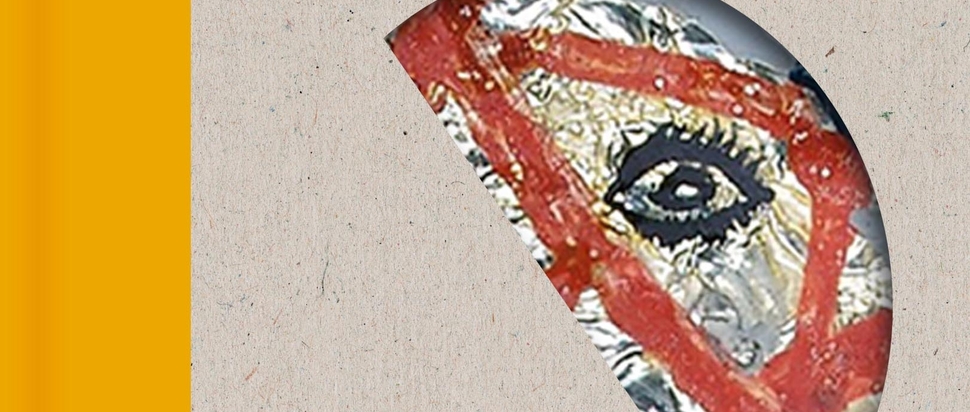
The mother is a whistleblower whose story the children carry like a wound. She worked for Kindweed, exposed the truth about the company, was sacked, prosecuted, and confined to a red line painted around the family home. Her philosophy—"We can't solve it, but we can salve it"—becomes the novel's governing ethos. After she disappears, her values guide the children.
Two parables provide a mythic framework for resistance. One tells of a horse-headed child who hears the unsaid, is declared unverifiable and taken. Her mother remembers, and all abused things rise as a grey mountain of clamour. The second concerns a tyrant who kills his opponent, deposes of the ashes. Yet, the ash becomes the air, the water, the universe. Together, the parables present defiance as the only response to erasure.
Gliff operates on prehistoric, living, and literary levels. The children are shown a prehistoric horse carving by their mother., paving the way for the living horse, that Rose names "Gliff"—a Scottish and northern English word for "anything". The horse steps over the red line and goes north. Smith also evokes Swift's Houyhnhnms from Gulliver's Travels, embodying gentleness and truthfulness.
Briar's arc moves from resistance to complicity and redemption. Five years after her capture and "re-education", she has become "Mr Allendale", a Packing Belt Superior forced into a male identity. The turning point comes when an injured worker, Ayesha Falcon, tells her the story of the cave where Rose had lived and helped "ferals". Confronted with Ayesha's fate, Briar recognises her betrayal.
The final pages belong to Rose, who remains unverifiable to the end. She anchors the novel's moral vision because she never becomes complicit. North signifies the mother's trip, the cave art, the unverifiable, and escape from the surveillance state. For a Scottish writer like Smith, north expands into rebel territory.
After Briar's first-person narration dominates most of the novel, the final pages' switch to second person: "You are a girl on a horse." The reader becomes Rose. Resistance is no longer observed but enacted. The ending remains open: Rose, Colon, and Gliff walk north; Briar follows later. "We'll be making it up as we go" refuses closure. There is no guaranteed victory, only an improvised future beyond authoritarianism, surveillance, and the red line.
In Gliff, Ali Smith constructs a near-future where truth-tellers are rendered "unverifiable". She identifies the defining pathologies of contemporary society—surveillance, hostility toward refugees and truth-tellers, corporate and establishment impunity. Gliff is one of the most significant dystopian novels our time because it shows us how to live in the future already here.
(Gliff. By Ali Smith. Hamish Hamilton, 288pp)