
The following article by John Molloy was first published in Unity, the weekly paper of the Irish Communist Party.
IN many overviews of Britain's role in Ireland a portion of a speech by Winston Churchill emphasising the durability of conflict even after the cataclysm of the First World War is often cited – "The whole map of Europe has been changed. The position of countries has been violently altered. The modes of thought of men (sic), the whole outlook on affairs, the grouping of parties, all have encountered violent and tremendous changes in the deluge of the world, but as the deluge subsides and the waters fall short, we see the dreary steeples of Fermanagh and Tyrone emerging once again."
While this matter-of-fact tone makes its use attractive to historians, what came next in the speech is more telling – an overt self-pitying exposition of the imperial "white man's burden". In this way Churchill stated that the durability of such conflict "says a lot for the persistency with which Irish men on the one side or the other are able to pursue their controversies. It says a great deal for the power which Ireland has, both Nationalist and Orange, to lay their hands upon the vital strings of British life and politics, and to hold, dominate, and convulse, year after year, generation after generation, the politics of this powerful country."
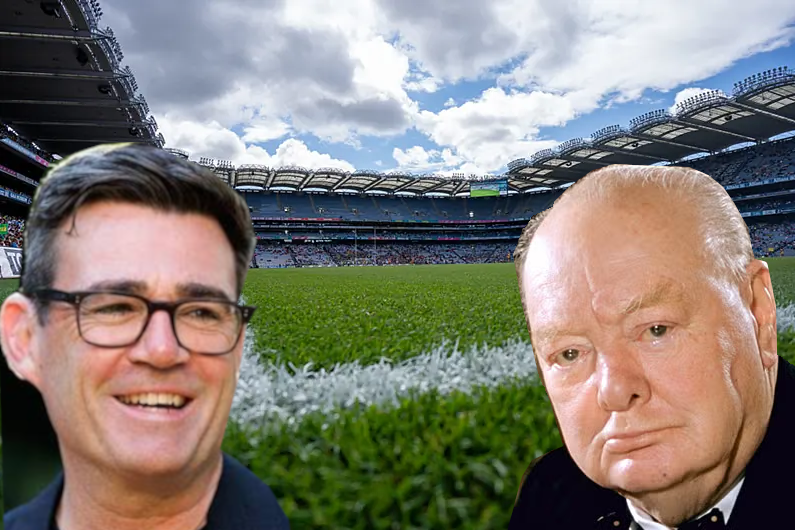
This offensive, patronising approach still runs through British policy and has been on display again in reaction to an old familiar "dreary steeple", that of Drumcree church, depressingly looming into view again. While the Parades Commission's admitted failure that led to a "procedural error" in their treatment of the Orange Order's application to walk the Garvaghy Road was sloppy in the extreme and indicative of wider administrative failings here – the ability of this issue to retain its power is indicative of two key features. The first is political unionism's clear decision to retain nihilist loyalism as its lodestar. This focus is expressed in loyalist social media listing "achievement" as imagining how angry nationalists must be that a "Border Poll, Casement Park, Irish Language Strategy, the A5 upgrade [a nationalist issue, apparently because the GAA have supported it], abolition of the ICRIR" etc. aren't progressing. The second feature is how successive British Prime Ministers fail to respond to this doubling down on "zero-sum" sterility. In this way, the passage of time since 1998 and increasing dominance of English nationalism at Westminster has seen a regression in this approach, combined with the "just get on with it" tone from successive Secretaries of State or Prime Ministers. Enter stage (definitely not) left Andy Burnham patronising the natives by suggesting a border poll is "off the table" and stating that, like a Brexit or Scottish Independence vote its consequence would, unlike partition presumably, "take a long time to heal".
This doesn't suggest that any new thinking, profound thinking, or thinking at all, from the British state, as co-signatory of the Good Friday Agreement, about how, as part of its international obligations, it, in the fullest sense, should be contributing to sustaining and renewing the GFA institutions. Without such commitment and matched by similar passivity from Leinster House, the mists of "creative ambiguity" have cleared, and the British state and its local proxies appear as 1998's major beneficiaries given that electoralism, impotent symbolism (a nationalist First Minister) or the mere promise of a border poll are hardly enough to show anyone else this type of "politics work". With a Unionist veto intact and the very bigots who most opposed the Peace Process now living high on the hog of the Stormont gravy train, clearly they don't. In this context, Sinn Féin may be being goaded to collapse the institutions but they have said, "walking away" would mean "handing control of…public services over to British government ministers". This position may not survive the Autumn however and even if it does, the real question that remains is what progressive coalition needs to be built, what new civil rights agenda developed and what reformed institutions are still required to challenge and subvert the "carnival of reaction" and its imperial sponsor.