
The following article by Raymond O'Connell was first published in Unity, the weekly paper of the Irish Communist Party.
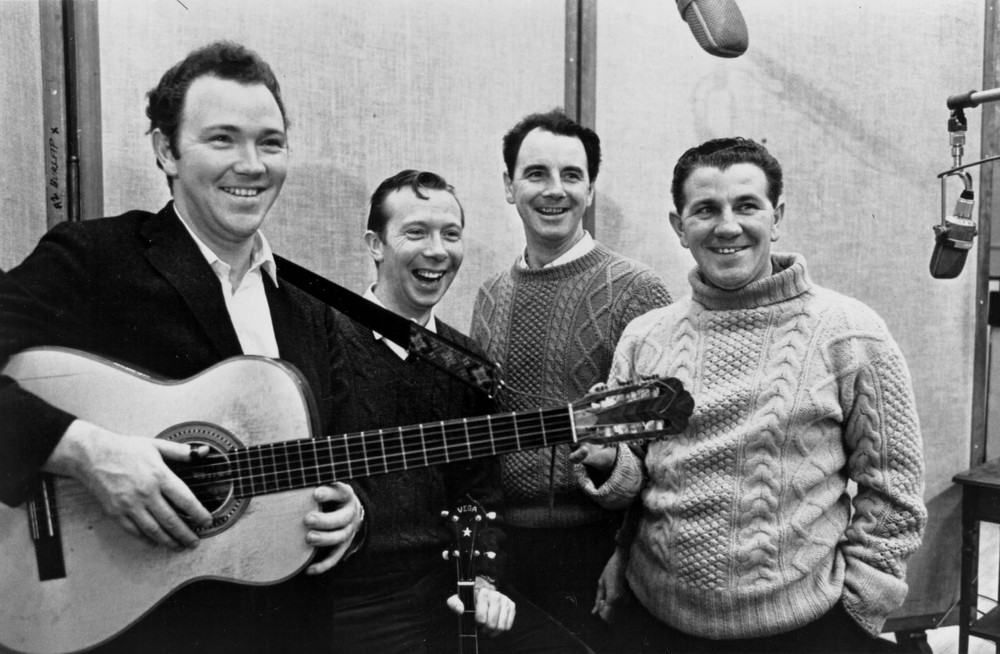
AS we attempted (unsuccessfully) to avoid the rain Last Sunday afternoon in Belfast my friend mentioned some of the Folk groups we had seen back in the 1960s. One venue was the Youth Centre in May Street, now a car park. We saw the McPeake Family and the Dubliners there. Of course, the biggest Irish Folk group of the time was The Clancy Brothers and Tommy Mackem in regulation Aran sweaters.
Robin Hall and Jimmy McGregor we saw in the Ulster Hall where the Corrie Folk Trio and Paddy Bell also appeared. Paddy Bell was from Belfast and sang some songs in Scots Gaelic and of course Roy Williamson of the Corries went on to write Flower of Scotland. One of the support groups was The Silkie, an English Folk Group (briefly compared to Peter, Paul and Mary) who had a hit with the Beatles You've Got to Hide Your Love Away.
Robin Hall and Jimmy McGregor sang out the BBC TV programme 'Tonight' as did Rory and Alex McEwen and Cy Grant, the West Indian singer. Hootenanny was a Scottish TV series in the early 60s and Degrees of Folk came later in the decade. Even the cultural programme Monitor broadcast a Ceilidh from a pub in Connemara. This was back in the days of two channels, BBC and ITV (UTV).
There was also a revival of Folk music in England. The Spinners, a group from Liverpool were prominent from the late 1950s. Ewan McColl is legend of course as is Martin Carthy but less well known is AL Lloyd, a communist and an important collector of English Folk music and Sydney Carter a quaker and pacifist – although it is hard to forgive him for turning Simple Gifts into Lord of the Dance. From 1965 Folk also went electric, of course courtesy of Bob Dylan. He had been influenced by Woody 'This machine kills fascists' Guthrie and US folk music still had Pete Seegar as an iconic representative of its radical history.
On a trip round Ireland one summer while living in a VW Kosan Gas van we saw Pecker Dunne in a pub when he still had black hair and a guitar made from what looked like orange boxes. Then it was on to Salthill and O'Connor's pub which was the musical hub there.
Music was not the sole focus though. Early adult reading included Walter Macken's trilogy, Seek the Fair Land, The Silent People and The Scorching Wind. Then we discovered Mary O'Malley's atmospheric back-room theatre in Derryvolgie Ave. before it found its new home on Ridgeway St. We saw O'Casey's and many other Irish plays for the first time. Books and plays were combined when I saw Stephen D originally produced for the Dublin Theatre Festival in 1962, first on TV and then in Belfast having been blown away by the book A Portrait of the Artist as a Young Man.
Looking back on this 'cultural awakening' what leaps out is the absence of the Irish language. Back then even if opportunities existed to study it, I would not have known how or where to look.
History-memoirs
Raymond writes about the McPeak Family who helped with the trad revival in the North in the 50’s. They were close to the CP and in fact accompanied Edwina Stewart and Jimmy Stewart (later to become the Chairperson of the CPI ) to the 6th World Festival of Youth and Students in Moscow in 1957.
In 1968 they played at a Morning Star rally and festival in Manchester and Mulholland School of dancing also performed. With them were civil rights activist from the North. Myself and sister Margaret went with our 4 children , youngest -Russell was 2 (my son) and oldest Julie was 8 (Margaret’s daughter), it was the first time that we had used a creche. It was a fantastic experience with Leon Rosselson and other singers as well a political speakers. This was the first time that we had heard the McPeaks on stage and was not to know that later in 1968 Margaret and in 69 myself would be living in Belfast and would become friends with the family who we saw many times.
In 2013, I asked Jimmy McPeak if he would lend the International Brigade Commemoration Committee his big base as we had a group (a player needed the base) coming from Scotland and England to play in memory of those in Chile on the 40 anniversary of the fascist coup. He did and I collected it from his house. The event took place in the Dockers Club-sadly now closed.