The following article by Lynda Walker was first published in Unity, the weekly paper of the Irish Communist Party.
IF like me you are inundated with countless emails that ask for solidarity, Stop the War, emails that provides information on a whole range of human right issues, to sign petitions then it is difficult to keep up with the priorities. One email that I received last week relates to a subject that interests many of us World Press Freedom Day 3rd May: Together for Information. The International Federation of Journalists (IFJ described as the world’s largest organisation of journalists) warned about the “deplorable” state of press freedom worldwide and calling for a citizens’ mobilisation to defend the right to information, a cornerstone of democracy. In this case. The IFJ’s Centenary World Congress was held in Paris from 5th – 7th May 2026. More than 300 journalist’s unions and associations’ representatives attended. Hosted by IFJ’s French affiliates SNJ, SNJ-CGT, CFDT journalistes and Force Ouvrière, the Congress theme was: ‘100 years of international solidarity for strong journalism and trade unionism’
In February this year the IFJ published its 35th annual report which stated that “128 media workers and journalists were killed, including 11 women, and 9 accidental deaths in 2025. The IFJ calls on UN Member States “to urgently adopt the International Convention on the Safety and Independence of Journalists, initiated by the IFJ, in order to end the cycle of violence and impunity”
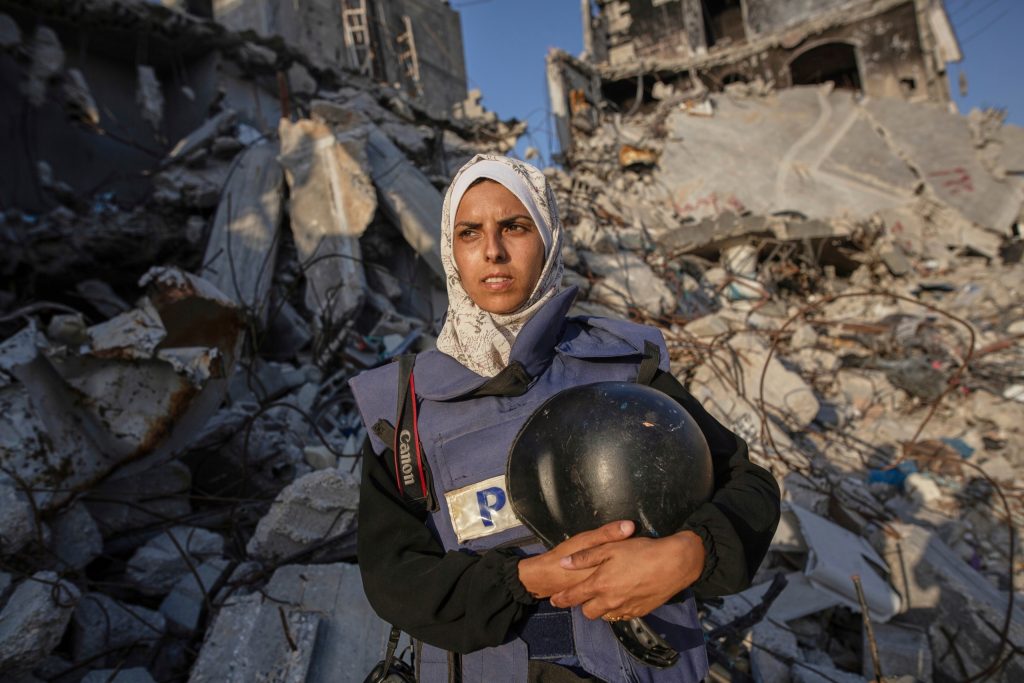
The IFJ specifically condemns armed conflicts in which being identified as “press” has become a reason to be targeted rather than protected. In Gaza, Ukraine, Palestine, Lebanon and Sudan, for example, reporters are being arrested, forced into exile or killed because of their work.
The advancement of technological surveillance is such that the IFJ launched a landmark investigative study on 28 April exposing how journalists across the globe are subject to a systemic infrastructure of control through increasingly sophisticated digital surveillance technologies. The study provides urgent recommendations to strengthen journalists’ security and protect the media.
The IFJ says “In conflict zones, such as Gaza or Ukraine, AI systems now fuse telecom and drone feeds to identify and track journalists, blurring the line between observation and physical targeting,” linking it to the killing of journalists.
In Northern Ireland in 2024 the use of surveillance technology came to light in the case brought by Journalists Barry McCaffrey and Trevor Birney. The Investigatory Powers Tribunal found that the Police Service of Northern Ireland and Metropolitan Police acted illegally by spying on two Belfast journalists to identify their sources
Also in 2026 it was reported that the PSNI was facing calls to provide details of a £5.5m contract with an Israeli firm over fears it could be linked to software used to carry out intrusive surveillance. However, the police have already admitted using Israeli technology known as Cellebrite, which is often used to access electronic devices in police stations and extract data.
Patrick Corrigan, the human rights organisation’s Northern Ireland director, said this is the most dangerous place in the UK for journalists. Two journalists, Martin O’Hagan and Lyra McKee, were killed in 2001 and 2019 respectively, while others have been physically attacked, had equipment damaged and cars battered with poles laced with nails. In 2025 Amnesty reported that there have been 71 attacks or threats on journalists in Northern Ireland since 2019. The report features 26 interviews, including 22 with journalists in which they recounted their experiences of being told they will be shot or stabbed, and threatened with bombs under their car.
In the UK more than 229,000 people have signed petitions demanding that the government scrap all public contracts with Palantir as backlash grows over the US tech giant’s expanding role in the NHS, police and military. The surge in opposition follows heightened scrutiny of Palantir’s ties to Donald Trump’s ICE immigration enforcement and the Israeli military – partnerships that campaigners argue make the firm an unfit custodian of British citizens’ private information.
The information that the IFJ provided is extensive, but there is not enough space here to deal with the questions of misrepresentation and ownership of the media. Another time.